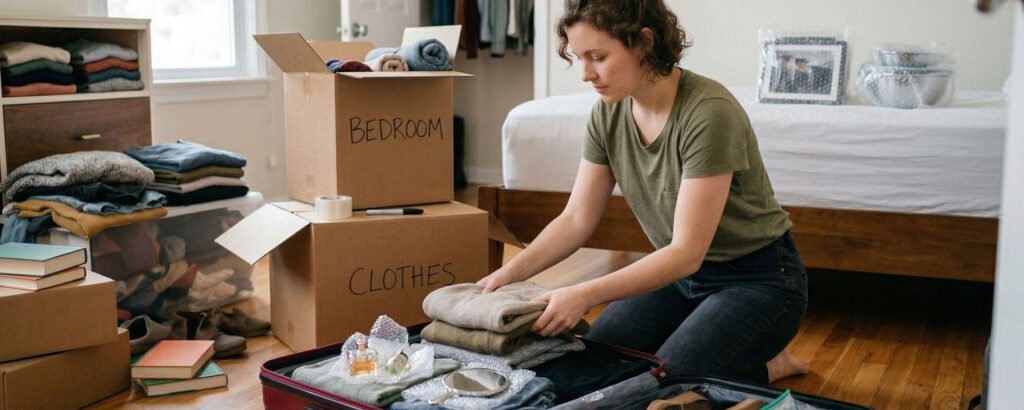
Packing clothes in a rush usually ends in damaged garments and boxes that are impossible to lift.
Clothing is one of the highest-volume items in any move — and, paradoxically, one of the least carefully packed. The typical result: boxes that are too heavy, wrinkled clothes that need washing or ironing on arrival, and a chaotic unpacking process where nothing is where it should be.
The good news is that packing clothes well doesn’t take much time — it just takes using the right method for the right type of garment. This guide explains when to use suitcases, when wardrobe boxes are the better choice, and when vacuum bags are the most efficient option.
Suitcases are the best option for clothes you’ll need first: what you’ll wear on moving day, your outfits for the first two or three days in the new place, and any delicate items you don’t want mixed in with everything else.
Use them for:
Key advantage: suitcases have wheels, carry themselves, and don’t need to be unpacked immediately — you can live out of them for the first few days while you organize everything else.
Wardrobe boxes are tall boxes with a hanging bar that lets you transfer clothes directly from the closet — hangers and all. They’re ideal when you want clothes to arrive ready to hang, with no ironing needed.
Use them for:
Key advantage: clothes travel hanging, arrive wrinkle-free, and go straight into the new closet without a stop at the ironing board.
Consideration: wardrobe boxes are bulkier and heavier than standard boxes. If there are stairs or narrow access points, their size can slow down loading. Mention them when quoting so they’re factored into the estimate.
Vacuum bags compress clothing by removing air, reducing volume by up to 70%. They’re ideal for clothes you won’t need right away and that tolerate folding well.
Use them for:
Key advantage: they dramatically reduce volume — meaning fewer boxes, fewer trips, and more space in the truck.
Consideration: don’t use vacuum bags for delicate fabrics, fine wool, or garments that lose their shape under compression. Save this method for durable textiles.
Mixing clothes from different people or seasons in the same box guarantees chaotic unpacking. Pack by person and by category — that way unpacking is fast and logical.
Clothes seem light, but a box full of jeans or sweaters can quickly become impossible to lift. Use medium-sized boxes and distribute weight evenly. A well-packed clothing box should be liftable without excessive effort.
«Clothes» isn’t enough. Label with the destination room, the person, and a basic description: «Main bedroom — winter clothes» or «Kids — everyday wear.» That saves real time when unpacking.
Clothing is one of the most time-consuming items to pack properly. Start with seasonal and rarely-used clothes from week 3 of your moving plan, and save only the essentials for the final days.
Garment type Recommended method
Formal wear and suits | Wardrobe box or suitcase |
Everyday casual clothing | Medium box, well labeled |
Winter clothing and coats | Vacuum bag or wardrobe box |
Underwear and socks | Suitcase or ziplock bag inside a box |
Duvets and pillows | Vacuum bag |
Clothes for the first few days | Immediately accessible suitcase |
When clothes arrive organized, unpacking the rest of the house flows more smoothly. There’s no scrambling for something to wear the next morning, no ironing before heading out, and no mystery boxes nobody wants to open. With the right method, clothing becomes one of the easiest parts of any move — before, during, and after.
Every move is different. The volume of clothing, garment types, and available truck space may all influence the best strategy for your situation. We recommend getting a full quote for the most accurate estimate.
Already have your moving date? At Magno Moving, we handle the loading and unloading so everything arrives in order at your new place.