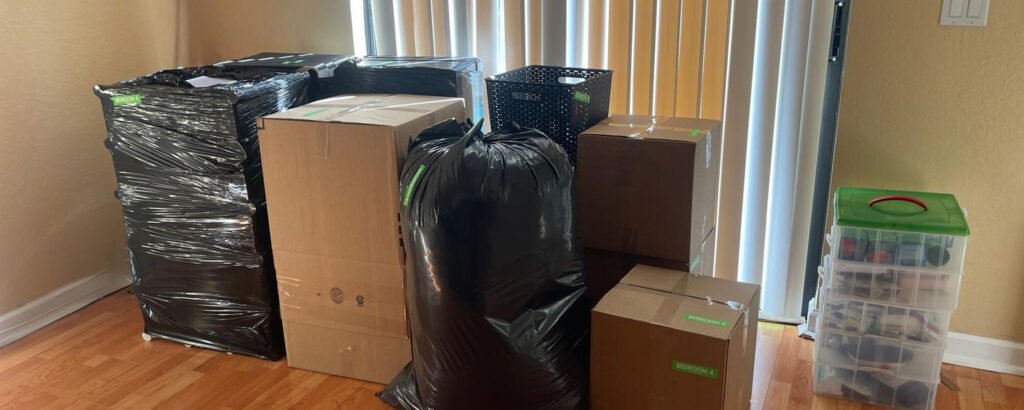
The details that seem minor are the ones that cost the most time.
A box left in the hallway. A door that won’t open all the way. An unprotected floor that forces the team to slow down. None of these problems are serious on their own — but combined, they can add 30 minutes to an hour to the total moving time. In an hourly service, that translates directly into cost.
Preparing your space before the team arrives is one of the most effective things you can do to make loading and unloading faster, safer, and hassle-free. This guide walks you through exactly what to prepare — room by room and access point by access point.
A moving team works continuously: every trip between the space and the truck needs to flow without interruption. When there are obstacles, the rhythm breaks — and every pause, however small, adds to the total time.
The three factors that most impact workflow are:
Clear access: hallways, doors, and exits free of obstacles let the team move with loads without stopping.
Protected floors and walls: especially in buildings with strict rules, protection prevents damage and potential claims afterward.
Organized and ready items: knowing exactly what’s being moved and where it goes reduces last-minute questions and decisions.
Hallways are the main artery of any move — everything passes through them. Make sure they’re completely clear before the team arrives:
The front door is the highest-traffic point during the move. To keep it friction-free:
If your building has an elevator, using it efficiently can make a significant difference in total time:
If stairs are part of the route, preparation becomes even more important:
Floors are the most exposed surfaces during a move, especially in hallways and high-traffic areas:
Door frames are the most vulnerable points when moving large furniture:
Preparation doesn’t end at the origin. The destination also needs to be ready to receive the load:
Before the team arrives, run through this list:
✅ Hallways and exits completely clear
✅ Rugs and mats removed from the route
✅ Doors that open fully and can be held open
✅ Elevator reserved with interior protection in place
✅ Floors covered in high-traffic areas
✅ Door frames and wall corners protected
✅ Artwork and decor removed from transit hallways
✅ Destination space cleared and ready to receive furniture
✅ Parking arranged at both origin and destination
✅ Code access or security entry procedures shared with the team
Every item on this list represents minutes that won’t be lost on moving day. It’s not about doing extra work — it’s about removing friction so the team can work without pauses from the first minute to the last.
Every move is different. Final time depends on the size of your space, the volume of belongings, and access conditions. We recommend getting a full quote with all the details for the most accurate estimate.
Got a moving date? At Magno Moving, we work to make every loading and unloading fast, safe, and hasslefree.